Friday, October 16, 2009

Sun City Girls - Cameo Demons and Their Manifestations: Carnival Folklore Resurrection vol. 1


Chokofango request. SCG series in which field recordings, gamelan exercises, headfucking psychedelia, traditional asian folksong reinterpretation, occult conspiracy radio rants, diatribes on the state of their fridge, and other assorted dementia collide in 14 exquisite artifacts.

Francheska la diosa

Super_Collider - Raw Digits


For Howard, Super_Collider's second album, my favorite.

"The reappearance of Super_Collider's Raw Digits is timely. Recorded by Jamie Lidell with Cristian Vogel, it's a superbly wrought, imaginary robo-funk album that could only be brought into being by a process of studio dicing, stretching, compressing, inverting, processing and reprocessing. The method of its construction, Lidell conceded in The Wire 257, took its toll. Assembled between 1999 and 2001, the contrivance and the effort were more than worthwhile. Opener 'Messagesacomin', which wiggles and struggles and thrives on being denied breaking out into a fully blown beat, is like a re-reading of classic 80s Prince- not a derivative but a multiplication, a hall of mirrors expansion of the possibilities that Prince's machine sensuality suggested. Lidell's vocal submission to the elaborate constraints set up by Vogel is vital to the tension of Raw Digits. 'Gravity Rearrangin', on which the pace lets up a little, feels like a reward for the rigorous modus operandi - languid, yet fatally twisted into a new soul shape, morphing in mid-song as if to illustrate the infinite capability suggested by the title. Raw Digits marks a lonely outpost of extreme achievement in the pop universe." - David Stubbs

La Buchi

Sun City Girls - Kaliflower


Two Sir Richard Bishop albums have been posted in this blog (here and here). Go get 'em, and then come back and get introduced to his old group (along with brother alan and Charlie Gocher), the legendary and deranged ultra dementors Sun City Girls. More SCG available upon request.

"This project came out originally as a CD. The front cover was a picture of Kali from a mini poster that Alan had bought in India. About three or four months later it was re-released as a vinyl edition. The only cut I actually recorded was the Uncle Tompa/Venerable song. That was from the 1990 tour when they stopped in Chicago and played at Lower Links. This was another one of those magical nights. This is the first recording I made of them. The whole recording is excellent but this is the only cut that will see the light of day. Uncle Tompa was recorded on the 234 cassette four track with two PZM taped to the ceiling and a stereo line out of the board mix. It was mixed a few months later at Hollywood Sound Recordes through a Neve with some sort of expensive compressors. It makes all the difference. If you have a some cassette four track tapes you want to mix, take it to a swanky studio and spend the money. You won't regret it. " - SRB

Reformulate

Thursday, October 15, 2009

Spacek - Vintage Hi-Tech


The supreme craftsmen of haunted micro-soul.

"Apparently once described as the 'Radiohead of Soul' (pffft), Spacek return with the follow up to their epochal 2001 debut Curvatia. Released from a frustrating major label deal, Vintage Hi-Tech is the result of the diligent toil of Steve Spacek and Morgan Zante in their newly built studio. The duo have been working together with vocalist Edmund Cavill since the mid-90s and the ten tracks on Vintage Hi-Tech impressively emphasise Spacek's individual perspective.

The stripped to the bone R&B,downbeats and soft, endearingly evocative vocals make the unmistakeable Spacek sound and combine to create shades of a Massive Attack tete-a-tete with D'Angelo. This album really is in a world of its own: its delayed, swinging tracks are rooted in soul but cuts like the hip hop inspired "Motion Control" show an alternative side to what is an essentially concise and well produced version of a late night soundtrack. The groovy, cutting-edge tracks such as "Amazing" and "I Know" (where the beats just give a slight suggestion of funk) to the jazzy vocalled "Time", this is definitely an album you can warm to. In between, there's the void, containing nothing but vocals and vibes until "La Bougie" and its lazy, discordant finale.

This is a laidback, occasionally horizontal album and very good it is too. Timeless and futuristic at the same time, Spacek's fragile songs remain their strongest advantage. Their inimitable sound is instantly recognisable and their music remains essentially beyond any specific classification." - David Silverman

Anibal BBQ

Wednesday, October 14, 2009

Built To Spill & Lou Barlow


There Is No Enemy


Goodnight Unknown

And just I was about to say that Indie-Rock is dead.

Cosmic Jokers - s/t


Kosmische bastards unite!

"The Cosmic Jokers was never an ensemble, per se; its members did not play together as Cosmic Jokers, and in fact were not even asked to join the group. Their music was created from sessions put together by Rolf-Ulrich Kaiser early in 1973. He arranged for several acid parties to be held at the sound studio owned by Dieter Dierks, where musicians were offered drugs in exchange for recording tracks. Participants included Manuel Göttsching and Klaus Schulze of Ash Ra Tempel, Jurgen Dollase and Harold Grosskopf of Wallenstein, and Dierks. Prior to this, all of the musicians involved had been in the Cosmic Couriers, which had played on experimental recordings by Sergius Golowin, Walter Wegmuller, and Timothy Leary.

Kaiser took the tapes from these sessions, edited and mixed them with Dierks, and released them on his label, Kosmische Musik, complete with the musicians' pictures on the LP sleeve, without asking for their permission. Göttsching didn't find out about the record release until he heard it playing in a record store in Berlin and asked the counter help what was playing. Kaiser released five records under the name Cosmic Jokers in 1974, one of which was actually a label sampler and a second, Gilles Zeitschiff, consisted of Kaiser's then-girlfriend Gille Lettmann speaking over sounds taken from prior label releases. While none of the musicians were very happy with the recordings, Schulze was so angry after the release of Gilles Zeitschiff that he sued Kaiser. In 1975, Kaiser was forced to discontinue and withdraw the recordings, and he fled the country over the affair, abandoning the record label over the threat of impending legal problems."

Schwarzkommando mandala

Tuesday, October 13, 2009

Madlib - Shades Of Blue


this is a classic. i was wondering why this hasn't been uploaded to the chasm lovers union. one of Madlib`s finest works, remixing many classic tunes from the Blue Note Records catalog in their "funky blue note" era. it`s something that any ear can digest with ease. Blue Note gave all the master tracks to Madlib and gave him permission to do whatever he wanted to do, so obviously he went all beat-tastik on this shit and it was freaking worth it. Blue Note released this album in their label, something that no hip hop producer was ever offered. viva le Madlib. viva le beats.


stepping into tomorrow.

Experimental Audio Research - Beyond the Pale


Sonic Boom's main project after the dissolution of Spacemen 3. Featuring Kevin Martin, Kevin Shields and Eddie Prevost.


"Recorded in 1992 and promised to appear shortly after Mesmerised's release, Beyond the Pale only finally surfaced four years later, on a completely different label than indicated. Arguably this had something to do with Kevin Shields, who makes his one and only appearance on an E.A.R. album with the first track, also the title song -- perhaps they had to remix it to death or something. Whatever the exact reason, Beyond the Pale also is the one time the original four members of the group, Shields, Sonic Boom, Martin, and Prevost, all performed together under the E.A.R. rubric. Boom is credited with main songwriting and producing, understandable as he was taking the lead with the whole thing in the first place, though he and Martin did mix the album together at Shields' London studios. "Beyond the Pale" itself is an attractive monster of a track -- hearing everything from Martin's doomy, echoing drones and massive wah-wah guitar to Prevost's bowed cymbals in the mix makes for a fascinating and disturbing experience. Shields' own guitar work steers away from recreating My Bloody Valentine, instead sounding like strange howls in the distance and calmer, simpler tones up-front amidst the expected Boom touches. Another long monster of a song, "In the Cold Light of Day," sounds like a full collaboration minus Shields, with distorted, stretched-out Martin saxophone and other chilling sonic touches dominating, along with more odd, entrancing percussion work from Prevost and mournful sighs from at least one of the members. "Dusk" definitely has an overwhelming sense of Martin's low, dark musical meditations, minor keys echoing into the infinite. The remaining numbers sound more predominantly like Boom with occasional guest help, as with the buried drumming from Prevost on "The Calm Beyond" or the warm oscillations turned harsher via Martin's work on "The Circle Is Blue."- Ned Raggett

Calabaza

The Vivian Girls in Puerto Rico.


Love em or hate em, theyre heading this way.


Vivian Girls started in Brooklyn, NY in March 2007 as the trio of Cassie Ramone (guitar/vocals), Kickball Katy (bass/drums/vocals) and Frankie Rose (drums/bass/vocals). While only a band for a short while, they recorded a demo CD-R which included five original songs and a Wipers cover, and began to play locally in Brooklyn and Katy and Cassie's home state of New Jersey. Within the first couple of months they had already developed a strong local following, supporting acts like Jay Reatard, Sonic Youth and the King Khan & BBQ Show as well as finding kindred spirits in other locals like Cause Co-Motion!, Crystal Stilts, and Woods, with whom they’ve shared many bills and helped develop a local scene. The band is still very much connected to their home scene. In March 2008 they released the "Wild Eyes" single on the Plays With Dolls label. With very little promotion and distribution the single became an underground indie hit as it charted on many college radio playlists and garnered positive reviews on the internet. Recorded in the same session, their debut self-titled LP was released by the Mauled by Tigers label, whose initial pressing of the LP sold out in ten days. During this time, the group signed with In The Red Records who released a new single in August 2008. In The Red re-released the Mauled by Tigers record on LP and CD formats in October 2008. In July 2008 the band underwent a lineup change with new drummer Ali Koehler replacing Frankie Rose. The band then went on an extensive tour that saw them visit the U.S., Australia, New Zealand, Japan and Puerto Rico in two months. Their second album, Everything Goes Wrong was released by In The Red in September 2009. [Wiki]


Jueves 22 de Octubre, 2009
Nuyorican Cafe, Viejo San Juan
VIVIAN GIRLS
Campo Formio
Un Final Fatal
Anti-Sociales
8PM - $5

Viernes 23 de Octubre, 2009
Bamboo Beach, Isabela
VIVIAN GIRLS
Los Vigilantes
No Muertos
+1 TBA
8PM - $5

Sabado, 24 de Octubre, 2009
Cafe 103 , Rio Piedras
VIVIAN GIRLS (Presentacion Acustica)
5PM - GRATIS!
-----------
Taller Ce, Rio Piedras
VIVIAN GIRLS
Juventud Crasa
Similar
Re-Animadores
8PM - $5

that red-head is cuuuuuute! (E-dawg hook a nigga up!)

Monday, October 12, 2009

Don Carlos & Gold - Them Never Know Natty Dread Have Him Credential


Another reggae classic from the master of sweet talking the ladies, Don Carlos. This album is backed up by the incredible Roots Radics band with Gold backing up vocals, making some nice horn lines and some beautiful compositions.

ride on, christine.

Thursday, October 8, 2009

John Fahey - Old Girlfriends And Other Horrible Memories.


Netherlandian request. More Fahey goodness.


[this track is not on the record, but its kickass nonetheless]

Twilight Zone

Wednesday, October 7, 2009

Joe McPhee - Nation Time


For Chokabert. McPhee's debut and an avant jazz classic. From 1970.

"IF you have enjoyed some of Joe McPhee's recent releases, such as Undersound or Novio Iolu, you may be in for a bit of a surprise. Even if you're well aware that Joe doesn't always work with the delicacy and subtlety he employs on those two discs, but with the bluster and grandeur of Grand Marquis, you'll find that this one is different. A long-awaited rerelease of a 1970 recording, Nation Time is the exuberance of the master in his youth, haranguing the crowd ("WHAT TIME IS IT?" "Nation Time" "AW, C'MON! YOU CAN DO BETTER THAN THAT! WHAT TIIIIME IS IT???" "NATION TIME!") and playing a glorious to-the-wall mixture of r&b and free motifs, with a great deal more thrown in too.

Two of these three long tracks were recorded at a concert at Vassar College on December 12, 1970: "Nation Time" and "Scorpio's Dance." Featuring the electric piano of Mike Kull and the relentless percussion of Bruce Thompson and Ernest Bostic, there is a definite hint of rock in the music. McPhee also, especially on "Nation Time," plays with a burred r&b tenor tone reminiscent of Ornette Coleman's much-imitated sound on Ornette on Tenor. And also like the music on that album, the groove isn't constant. Although it's a stronger one than Ornette ever favored at that time, it's elastic enough to give way to periods where McPhee and Kull solo searchingly in empty space. Indeed, one of the most exciting things about this album is the sense of space. Although all three of these tracks are quite propulsive, McPhee and his men are imaginative enough to continue to refresh them with rhythmic and other variations.

"Shakey Jake," recorded in a studio the next day, adds an alto saxophonist, an organist, and an electric guitarist. The electric guitarist plays in the mode of many players in the nascent fusion movement of those days, so this track's flavor fits right in with the other two: free r&b of a style more musically adventurous than that made famous by Miles Davis, but still full of enough hooks to wow the crowd.

And wow the crowd it did. Thirty years later, it's still just as powerful."- Robert Spencer

Cagacatre

Tuesday, October 6, 2009

Tradition - Captain Ganja & The Space Patrol

oh my science, this album is just out of this planetary system. synths, horns, vocals, space echo literally, jah jah, water samples, arpeggiators, cosmic dust, nature and reverb. one of the most unique and abstract dub albums that i`ve come into contact with. it was released in 1980 so its got some soul/r&b influences.

sorry, badongo sucks.


p.s. check out the mixing/recording engineer.

Monday, October 5, 2009

Gas - Koenigsforst


And we continue with albums for the Duke, this time my favorite Gas release. Gas is the project of Kompakt's founder and all around electronic music/techno maven Wolfgang Voigt, in which he aspires to reflect the sound of the "German Forest" and to create a "Germanic Popular Music" (yeah, sounds dodgy innit) using samples of German Romantic Composers and layers of synths and putting them through severe processing stress, the result being a smorgasbord of vaporous, magnificent sound.

"GAS is the vision of a sonic body between schönberg and kraftwerk, between french horn and bass drum. GAS is wagner goes glam rock, and hansel and gretel on acid. GAS is there to take you on a seemingly endless march through the under woods - and into the discoteque - of an imaginary, nebulous forest.

In his music, Wolfgang Voigt does not create a direct reference to the original sounds and or even the forest itself. He rather tries to reduce the "material" to its basic aesthetic structure by using different zoom, loop and alienation techniques in order to release it from its original meaning and context. His intention is to create a kind of aesthetic essence, a cave (detail/loop/repetition) where you can get lost.
and for all of you who think that this is too heavy to ingest, please accept this as wonderful music."- Raster Noton

Congre

Sunday, October 4, 2009

William Basinski - Melancholia

another great work from the master of gentle tape loops and melancholic music.

home of my first piano teacher.

Philogynist: A Mixtape.


A collection of songs directed at specific female names by some of my favorite artists.

1. Scott Walker - Mathilde
2. Arthur Russell - Janine
3. John Cale - Cleo
4. Kevin Ayers - Lady Rachel
5. The Animals - A Girl Named Sandoz
6. Slapp Happy - Karen
7. John Coltrane - Naima
8. Velvet Underground - Caroline
9. Bert Jansch - Veronica
10. Funkadelic - Alice In My Fantasies
11. The Squires (Early Neil Young) - Aurora
12. Robyn Hitchcock - Elizabeth Jade
13. David Byrne - Adé
14. John Cale - Helen Of Troy
15. John Fahey - Claire
16. The Mathew Herbert Big Band - Regina
17. Lenny Breau - Emily
18. Brigitte Fontaine - Brigitte
19. Mars - Helen Forsdale
20. Rotary Connection - Lady Jane (Stones' cover)
21. John Cale - Adelaide
22. Jonathan Richman & The Modern Lovers - Lydia
23. Kevin Ayers - Margaret
24. Bert Jansch - Katie Cruel (Feat. Beth Orton & Devendra Banhart)
25. Jeff Magnum - Naomi

'hope you enjoy.

Saturday, October 3, 2009

Amon Düül II - Tanz Der Lemminge


Be back soon with more for the Duke, but meanwhile, here's some prime Amon shit, from 1971.

coco lopez

The Caretaker - Persistent Repetition of Phrases


More for the Duke. I'll let James Kirby explain his Caretaker project himself:

"Background
Dusty and forgotten memories, echoes and vibrations from the past. Using as source, recordings from the 1920's and 1930's era of Ballroom music. Often painful and desolate memories, recalled and replayed from beyond the grave of our senses. In amongst this darkness lies the solace of a semi-recognisable melody or phrase, a beacon of light in this often dark and distant ocean of haunted recalled audio." Also, an exploration of Alzheimer's Disease.

"
"Slight glimpses of fond memories are endlessly repeated on yellow filmscreens, in the dark and dusty theatres of the human mind, until a loss of recollection occurs, leaving foreign fragments to a puzzle you can never put back together. Overall a very stirring and sad album, and a potent display of the musical uniqueness that makes The Caretaker so relevant." - Brainwashed

Chick-O-Sticks

William Basinski - El Camino Real


And we continue with the posts for Mr. Duke with an overwhelming piece from Mr. William Basinski. Basinski is quite a colorful NYC character who, like Jeck, deals primarily with discarded media, in this case degraded and corroded tape loops he himself made years ago. He also subtly treats these tapes, resulting in an extremely delicate music that you can hear even "melting" or turning itself into ether. The memory games he plays with his work also make him a revered figure in the hauntology ranks.

"The sound was an orchestra's melody that floated out of a small tape loop... The peaceful string melody could pass for Muzak for a shopping mall or funeral home lobby... [but] the music was drained of its potential kitsch - only majesty and sadness were left." - Cameron MacDonald


Fuck Yann Tiersen

Philip Jeck - 7


Mr. Duke asked me to post artists similar to Akira Rabelais in sound and spirit, and so we begin with Philip Jeck, who goes hunting for old, worn-down, scratched and dusty vinyl which he manipulates with a multitude of effects and preparations, creating beautiful sepia-toned memoradelia. No wonder he's considered a prime exponent of "hauntology" (a musical genre preoccupied with the creation of false memories, imagined nostalgia, and neurological simulacra through sound).

"When the repetitions culminate into glorious crests, it sounds as if recorded history in its entirety is singing one last song in the death throes of the waste bin."

Telepathine

Monday, September 28, 2009

Konono No. 1 : Congotronics 1 & 2


Ahh the Kalimba, what a wonderful little apparatus. Im dying to get my hands on one myself. The Kalimba or electric Likembé, is an african instrument also called a thumb piano or lamellaphone, it is featured in the following clip. I am absolutely infatuated with its singular and mesmerizing sound.


Konono No. 1 is a musical group from Kinshasa in the African Congo. They are a testament of the resilience of the d.i.y. aesthetic on a global scale. Their first album gained worldwide recognition in the marginally esosteric, dance music and even rock circles for its fresh and hipnotizing quality.


Congotronics 2 is more of a compilation featuring Konono No. 1 and other fairly similar but no less noteworthy artists.

1&2

[#1 is in .m4a format]

Sunday, September 27, 2009

Super_Collider - Head On.


For fans of Jamie Lidell.

"Super_Collider, the head-on collaboration of Brighton-based producers (and friends) Cristian Vogel and Jamie Lidell, results in an album of delightfully skewed dance-pop. Undoubtedly accomplished only after weeks at the computer (as the haggard faces and bleary eyes on the sleeve attest), Head On consists of ten songs mashing up P-Funk- and Prince-styled vocals into an electro-shredder similar to the one employed by Autechre and Oval. Though his experimental bent is well-known, Vogel's solo productions rarely forsake the almighty beat and thankfully, it's no different here. The old-school electro beatbox is in full effect, and while that usually makes for a stark quality to any throwback affair, Vogel and Lidell throw so many goofball effects and percussion detritus into the mix that most of the tracks here sound positively beefy."


DAT ASS.

Saturday, September 26, 2009

New Flesh For Old - Equilibrium


A great and forgotten British Hiphop crew, with a dystopian, decaying sound not unlike prime Tricky or New Kingdom.

"The debut LP for the three-piece British crew New Flesh for Old certainly qualified as foreign rap, but from the sound of it, hardly even sounded like it was created on this world. Tracks featured a nearly hoarse ragga shouter (Toastie Tailor) trading rhymes with a metaphysical dramatist (Juice Aleem) over a barrage of tough tech effects and cellar-level beats that sounded as though lifted from outer space. Equilibriums certainly owed few debts, whether to diggin'-in-the-crates hip-hop or digital rap of the Timbaland variety. It had the rough-edged reverb of ragga, effects with the sound of rusty pipes. Of any in the rap world, their style was closest to Company Flow; it had the same cold, alien production sense (harsh in a completely different way than DMX or Eminem), but was remarkaly focused, rarely sounding as deliberately difficult as El-P and crew. Toastie Tailor shone on nearly indecipherable yet immensely powerful tracks like "Invisible Ink" and "186000 Miles," while Juice Aleem matched the lyrical and verbal skills of Gift of Gab (from Blackalicious) on his standout, "Adoration of Kings." Meanwhile, Part 2 programmed cold, funky beats and filled in all the gaps with ominous, paranoid samples from a variety of sources. One of the best, most distinctive debuts in the brief history of British rap. - John Bush

Rolo Bellota

Thursday, September 24, 2009

Grupo Folklorico y Experimental Nuevayorquino/Har-You Percussion Group


Two somewhat underappreciated gems from the Upper-Manhattan and Bronx latin music scene of the 60's and 70's.


"Varied fusion of Cuban, Puerto Rican, and Mexican motifs by a collection of musical visionaries. Their sound is not at all limited to any one style; it jumps from traditional Cuban rhythms to Tejano accordion tunes to experimental rumba."


"The Har-You Percussion Group's self-titled album stands as a testament to how exciting and profound music education can be for kids. Imagine creating this album as your homework assignment. That's just what these eleven 16- to 19-year-old boys did under the guidance of Jamaican-born percussionist Montegro Joe. Latin, Cuban, jazz, and blues influences combine to create their boogie-down melting pot of rhythm that keeps the feet moving. Tracks like "Welcome to the Party" and "Feed Me Good" are exciting dance numbers. In contrast, "Oua-Train" is an impressive tribute to Coltrane featuring Nelson Sanamiago on alto sax. This is a rare album where music informs its powerful sounds."

Charles Mingus - The Black Saint And The Sinner Lady


One of the best jazz albums ever made, a truly revolutionary record by the great bassist. This album rearranged my head and nothing was ever the same.

"The Black Saint and the Sinner Lady is one of the greatest achievements in orchestration by any composer in jazz history. Charles Mingus consciously designed the six-part ballet as his magnum opus, and -- implied in his famous inclusion of liner notes by his psychologist -- it's as much an examination of his own tortured psyche as it is a conceptual piece about love and struggle. It veers between so many emotions that it defies easy encapsulation; for that matter, it can be difficult just to assimilate in the first place. Yet the work soon reveals itself as a masterpiece of rich, multi-layered texture and swirling tonal colors, manipulated with a painter's attention to detail. There are a few stylistic reference points -- Ellington, the contemporary avant-garde, several flamenco guitar breaks -- but the totality is quite unlike what came before it. Mingus relies heavily on the timbral contrasts between expressively vocal-like muted brass, a rumbling mass of low voices (including tuba and baritone sax), and achingly lyrical upper woodwinds, highlighted by altoist Charlie Mariano. Within that framework, Mingus plays shifting rhythms, moaning dissonances, and multiple lines off one another in the most complex, interlaced fashion he'd ever attempted. Mingus was sometimes pigeonholed as a firebrand, but the personal exorcism of Black Saint deserves the reputation -- one needn't be able to follow the story line to hear the suffering, mourning, frustration, and caged fury pouring out of the music. The 11-piece group rehearsed the original score during a Village Vanguard engagement, where Mingus allowed the players to mold the music further; in the studio, however, his exacting perfectionism made The Black Saint and the Sinner Lady the first jazz album to rely on overdubbing technology. The result is one of the high-water marks for avant-garde jazz in the '60s and arguably Mingus' most brilliant moment." - Steve Huey

"Touch my beloved's thought while her world's affluence crumbles at my feet".

madness

Fred Frith - Clearing


Extraordinary composer, improviser and founding member of Henry Cow, Massacre and Skeleton Crew, Frith is my kind of guitar god. This is his third solo guitar album, from 1981.

"In 1975, Fred Frith's Guitar Solos album was a bolt from the blue, a hitherto undreamed-of combination of the free improvisation aesthetic of Derek Bailey and, even more importantly, Keith Rowe, with a sensibility that owed more than a little to prog rock. In many ways, Clearing is a belated follow-up to that recording. The pieces are remarkably varied, from the shakuhachi-like freedom of the opening "White" to the folksy "The Bow Moon" to the frenetic, how-on-earth-does-he-do-that "Minimalism." Unlike many with his facility, Frith's technique, masterful though it is, never gets in the way of his storytelling; it's always subservient to the purpose of the composition. That said, his playing is nothing short of astounding. On "Theatre," a torrential piece with an Eastern European flavor, one would swear that his furious picking is being accompanied by a fiddle, so clear is the myriad of sounds. There are also several tracks, such as the closing "Blue," that feature some wonderfully heartfelt, almost romantically yearning strains. For longtime Frith fans, Clearing is a no-brainer pickup, certainly the most thoroughly enjoyable of the albums spotlighting his guitar playing in many a year. But it's also a fine introduction to the work of one of the more outstanding and influential experimental guitarists of the last 30 years and an accessible entryway for newcomers. Recommended." - Brian Olewnick

Culo de Reina

Sunday, September 20, 2009

Debris - Static Disposal


Deranged 70s motherfuckers kickin' out the mindmelting jams. If you like dross like Vivian Girls or Jay Reatard, steer clear.

Musicians:

THE Charles "Chuck Poison" Ivey: Low frequencey modulators, synthesizers, 'detonic guitar on "Flight Taken", sequential screams and marvelous moans.

O.Powers (Rectomo): Vibraharp, variable multi-stringed electronic exasperator coupled with various electronic special operations devices, b-flat coronet, vericose verbalizations and gruesome groans.

Johnny Gregg: Drum, drums, visceral vocals and gorgeous grunts.

Assisted by:

Dirk E. Rowntree: Triangle ("Manhattan"), Chinese Wood blocks ("Flight Taken"), composed and delivered Lizard King's dream speech ("Flight Taken"), composed dramatic readings ("Female Tracks")

Richard Davis: Sax, Organ, and 8" Circular Saw

deanna 'D': Sensuous mouthings on "Female Tracks"

Dana: Prisoner of Rock 'n' Roll


"Name-checked in the now legendary Nurse With Wound list and originally released in 1976, this one of a kind Dada/punk/psych masterpiece from Chickasha, Oklahoma is a must for fans of raw, twisted and beautiful pre-punk psychedelia. Influenced by bands such as Captain Beefheart, the Stooges and early Roxy Music but more akin to contemporaries such as Hearthan era Pere Ubu, Siren-era Chrome, Indiana-era MX-80 Sound and Canadian miscreants Simply Saucer, Debris'sole LP is a slice of truly mind altering sonic mayhem.

Tracks 1-11 taken from the original 1/4" 15 ips mixdown master tapes and were recorded on December 10 and 16, 1975 at Benson Sound Studio, Oklahoma City, Oklahoma, and mixed at Benson's on January 20, 1976.

All tracks digitally mastered by George Horn at Fantasy Studios, Berkeley, May 1999."

Fuckity fuck

The Notwist - Shrink


I cringe every time i hear/read the tag "indie-tronica". "Indie" in itself is flawed terminology or can fall prey to misrepresentations. Here there is a lil more than the name allows, theres some jazzy hints here and there and yes, plenty of electronically conceived noises, but still.
To me, this is The Notwist at the top of their game, Neon Golden is weak by comparison.


Kinda Svankmajer-esque no?

This one's jazzier.


Another Planet.

Saturday, September 19, 2009

Keith Hudson - Rasta Communication


For Abelardo, another masterwork from The Dark Prince of Reggae aka the Reggaedontologist.

"Virgin thought it had snagged the next Bob Marley when the label signed Hudson in 1976 -- and it did, in terms of artistry. But the hard-core Rastafarian wasn't malleable like the pop-conscious Marley. That said, Rasta Communication is the most refined record in Hudson's awesome discography. But it's still heavy; they didn't call Hudson "the dark prince" for nothing. Virgin was disappointed, and Hudson explained why on "Felt We Felt the Strain" -- "Never change me, never change me, I never change..." - Justin Farrar

My eyes are red

Friday, September 18, 2009

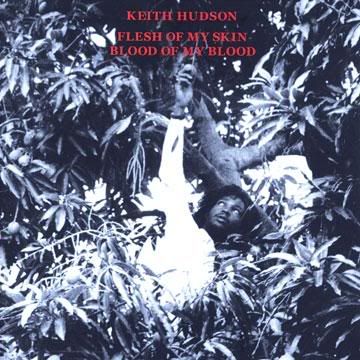
Keith Hudson - Flesh Of My Skin, Blood Of My Blood


This one's for Pachist.

I already posted Hudson's excellent Pick a Dub. Here's another classic widely considered to be one of the darkest reggae albums ever made.

"Anchored here by Santa Davis and George Fullwood from the Soul Syndicate - alongside musicians like Augustus Pablo, Count Ossie and Leroy Sibbles - Hudson's mood is tormented and dazed, as on titles like Darkest Night, My Nocturne and Testing My Faith he struggles for Black senses of commitment - political, existential, religious - at its breaking point. Magnificently and deadly serious, hauntingly unique, unmissable and unforgettable."

Tom Waits - Small Change


And old and great album by Tom, includes the immortal "Tom Traubert's Blues" and "the Piano Has Been Drinking".

Not Me

Linkremoved by request of corpo-vultures.

Thursday, September 17, 2009

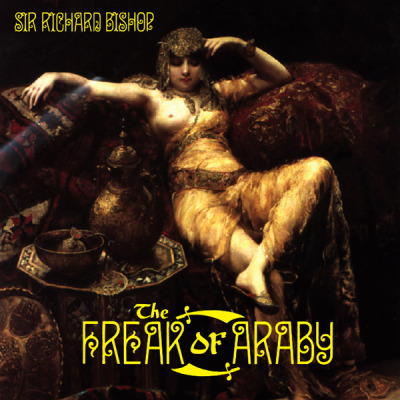
Sir Richard Bishop - The Freak of Araby

Requested.

The latest album from former Sun City Girls guitarist Sir Richard Bishop. Lots of Egyptian and middle eastern infuenced playing from Bishop on this one.

Wednesday, September 16, 2009

Terry Riley.


For Bennie Boom-Boom. More Riley for your "senseuphoric" pleasure.


Descending Moonshine Dervishes


Shri Camel


In C


Les Yeux Ferme & Lifespan

3/4HadBeenEliminated - A year of the aural gauge operation


Italian Magi, mapping new zones in rock.


3/4HadBeenEliminated was founded in Bologna, Italy, in 2002. Starting as a trio (guitarist/double bassist Stefano Pilia, turntablist/sound assembler Claudio Rocchetti, sound architect Valerio Tricoli), the drummer Tony Arrabito was added to the line up in 2004.

Their first self titled record (bowindo, 2003) was released after playing a series of live concerts in which the group attention was strongly focused on the performative/theatrical/ecological aspects of the event. Comprised of a large number of electronic and acoustic instruments, the album mirrors the disparate musical influences and aesthetics of the group: live electronics, electroacoustic composition, field recordings, drones...

In the following two years, after exploring and experimenting with self invented recording techniques, 3/4’s modus operandi focused on live interaction between electronic and acoustic instruments within a context in which the studio itself (tape machines, mixers, effects...) and the actual space in which the interaction took place (weird microphoning, feedbacks...) were considered and manipulated as instruments themselves (not by chance 3/4’s are fans of musicians such as This Heat, P16.D4, Todd Rundgren...). In this process, improvisation and group playing were the main issues, whereas 3/4’s first release was more based upon electroacoustic découpage.

"“A Year of the Aural Gauge Operation is the second album by Italian quartet 3/4HadBeenEliminated. Like recent music from their peers Renato Rinaldi and Giuseppe Ielasi, 3/4HadBeenEliminated transpose buzzing pools of insect chatter with rich, swelling drones and movements that gesture toward song. It’s another kind of ‘post rock’ that’s far removed from the genre’s typical signification. Where previously the term may have evoked slack-wristed, head-nodding fusions of jazz, electronics and rock, groups like 3/4HadBeenEliminated engage in nothing less than the molecularization of rock music, reducing it to a dense, evocative slurry of phantom tones and fleeting, melancholy phrases guaranteed to induce déjà vu.

The quartet often disrupts their own compositions, with several pieces dipping abruptly into silence only to gradually recharge on a different plane. The most engaging moments on the album occur when Claudio Rocchetti’s turntables and electronics inject ghostly voices, gritty noise and other incidentals into slowly developing themes. Building edifices of sound that threaten to topple even as they reach a graceful peak, 3/4HadBeenEliminated remind me of This Heat in their concrete approach to rock and improvisation, as they repeatedly let frayed ends disturb the pieces collected on this quietly stunning disc.” - Jon Dale

Desvelao

Tuesday, September 15, 2009

Nurse With Wound - Chance Meeting On A Dissecting Table Of A Sewing Machine And An Umbrella.


A reissue of the debut album by alpha-dementors Nurse With Wound. It includes a bonus track which consists of Current 93's David Tibet reading off the Nurse With Wound List, hearing Tibet namedrop my idols gives me a warm fuzzy feeling.

This is for Alex, thanks for the kind words.

Monday, September 14, 2009

T h e m s e l v e s - C r o w n s D o w n


Themselves are Jel & Doseone, a no-nonsense DJ & MC duo hailing from anticon records which has spawned such disparate yet similar artists as Why?, Tobacco, Son Lux and Passage.


Themselves TV Pt. 1 from anticon. on Vimeo.


This shit is sick.

Wednesday, September 9, 2009

Request: Dziga Vertov - Enthusiasm: Symphony of the Donbass


I'm looking for the soundtrack to Dziga Vertov's 1930 film "Enthusiasm: Symphony of the Donbass". If anyone has it please let us know.

Thanks.

Wire - A Bell Is a Cup...Until It is Struck


I love 80's Wire. After their initial epochal trilogy, most people think Wire quit or became a shadow of themselves. Quite the contrary in fact, while indulging experimentalism in their alternate guises (Dome, P'O, AC Marias etc) and their solo excursions, they crafted some of the most beautiful and contemplative pop of the era, of which "A Bell..." is the gold standard. Sell your kidney bingos.

"The British postpunk pioneers of Wire were one of the prime influences on bands like the Cure, Hüsker Dü and R.E.M. They have survived long enough to see their influence bear fruit while moving on to a more trancey, hypnotic kind of music that just might inspire yet another generation of musicians.

Wire weaves intricate textures out of the most basic materials; the components of a song are almost as fascinating as their interplay. On this record, timbre is as important as any other facet of the music.

You need a special decoder ring (not included) to understand the lyrics, but maybe they were designed to be misunderstood. Even "Kidney Bingos," the most poppy song on this album, has a chorus that runs, "Money spines paper lung/Kidney bingos organ fun." You might very well find yourself singing along, and the tune will haunt you for weeks, but what the heck does it mean?

Someone once said that architecture is frozen music; Wire's music is animated architecture. Wire won't blow you out of the room; it'll just keep you from leaving it." - Michael Azzerad

Yuca en escabeche

David Toop - Pink Noir


David Toop: master improviser, sound artist, instrument builder, scholar, living encyclopaedia and renowned journalist and author (go read "Rap Attack", "Exotica: Fabricated Soundscapes In A Real World" and "Ocean of Sound").

"...But these animadversions didn't cure my need for a respite, and like the linear guy I am I found one in a book. Subtitled "Aether Talk, Ambient Sound and Imaginary Worlds," David Toop's Ocean of Sound (Serpent's Tail) reminded me of what a glut of vapid electronica had made me forget--that pretechno and trance and the quiet stuff Brian Eno dubbed ambient all fit into a contemplative sensibility I'd rooted for since Terry Riley's A Rainbow in Curved Air in 1969, a sensibility that knows the uses and pleasures of rhythm even when it means to transcend them. Starting from Debussy and (tell 'em about it, David) Sun Ra without conceding a thing to the diachronic, Toop explodes the boundaries of that sensibility. Though he's suitably world-historical about "this alternately disorientating and inspiring openness through which all that is solid melts into aether," he's neither messianic nor polemical, which given the openness he's down with is only meet. And he's not too polite to mention when Stockhausen or the Aphex Twin or My Life in the Bush of Ghosts or Alice Coltrane fall short. From the short-lived Collusion to The Rap Attack to The Face to The Wire, Toop has always been an adventurous, knowledgeable critic. In a subculture that credits DJ Spooky's ridiculous spiels, he qualifies as a master sage.

Hopping from history to interview to description to memoir to analysis, hooking up Miles Davis and Kraftwerk and Lee Perry and Pandit Pran Nath, Toop has assembled a book that evokes and encapsulates simultaneously, a perfectly imperfect model of the kitchen-sink structures he'll convince you we can no longer live without. A fan of Sun Ra's comic grasp as well as his cosmic reach, Toop knows the dangers of political passivity, mind-body dualism, avant-garde bullshit, "the fine tribal and class divisions of leisure pursuits," and electronic "communities" that are no such thing. "What is ambient music?" he has the sense to ask early on. "Calm, therapeutic sounds for chilling out or music which taps into the disturbing, chaotic undertow of the environment?" Yet in the end he believes he is onto the future: "Music--fluid, quick, ethereal, outreaching, time-based, erotic and mathematical, immersive and intangible, rational and unconscious, ambient and solid--has anticipated the aether talk of the information ocean."

For Toop, ambient answers a need that's postmodern and millennial, synthesizing insecurity and hope, "bliss" and "non-specific dread." Together or separately, these examples are what he's talking about. They're designed as microcosms to dive into, not magic carpets to escape on, and gently or subtly or harshly or esoterically or whimsically or just plain oddly they accommodate the disturbing and the chaotic. Anybody whose notion of ambient is conditioned by the diverting sounds, swelling textures, and lulling grooves of the chill-out room may never buy another Quango collection again. Toop shows no interest in the 19th-century certainties so denatured by the new agers, whose complacent futurism and comfortable relations with a Higher Being the quieter postdance will get to eventually. Nor does he buy into the fuzak swing that signifies hip refinement not just in acid jazz, the lamest of the postdance subgenres, but in most drum-and-bass and a chunk of ambient as well. Although it's conceivable that Ocean of Sound will piss off postdance loyalists by downplaying their electronic experiments, it ought to do the opposite--point middle ways between a Hi-NRG with inevitable limits and the unobtrusive schlock the scene is just too vivid for.

Toop is a pretty vivid guy himself. Since 1995, he's assembled two additional two-CD sets for Virgin as well as recording two albums of his own music. Crooning on Venus, the vocal counterpart to Ocean of Sound, seems unnecessarily willful--mostly, I suspect, because the popular song Robert Wyatt and Chet Baker and Stina Nordenstam and Sheila Chandra think they're improving on is still far more vital formally than ambient house ever could be. Sugar and Poison, however, bears the same relation to the quiet-storm makeout-music comps where labels now recycle soul also-rans as Ocean of Sound does to ambient house--these come-ons are literally edgier, beset by an anxiety smoover grooves muffle and no less sexy for that. On Pink Noir (Virgin U.K.) and Screen Ceremonies (The Wire Editions U.K.), Toop plays guitar and anything else he can get his digits on, mixing in the worldwide sounds he's celebrated since he co-edited Collusion and bending the improvising community he's been part of since the '70s toward trad ambient. Besides how well they can or can't play, what distinguishes improvisers from mere jazz guys is their disdain or incapacity for swing or any other kind of pulse. So I'm delighted to report that Pink Noir, which features collaborators such as Hassell, is like an improviser's hodgepodge with a pulse, which usually makes all the difference. Screen Ceremonies's music for a postmodern sex ritual is even better--very Hassell-like in its tension, mystery, and organizing groove, and Hassell is as good as trad ambient gets. Tell me about a chill-out room where they play "The Psychic" and I'll do my damnedest not to nod off there." - Robert Christgau

Goblet
Tuesday, September 8, 2009

Go Organ! - Ate Bit

ok so i don`t want to be a douche but i just can`t get this link to work in fucking myspace, so i`m just gonna have to upload this album here.

sorry ok bai