 another great work from the master of gentle tape loops and melancholic music.
home of my first piano teacher.
 another great work from the master of gentle tape loops and melancholic music.


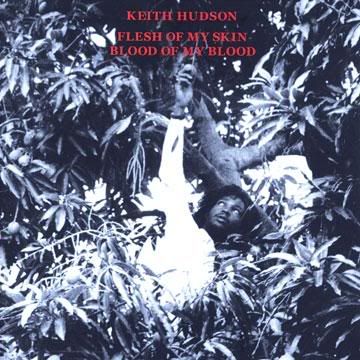

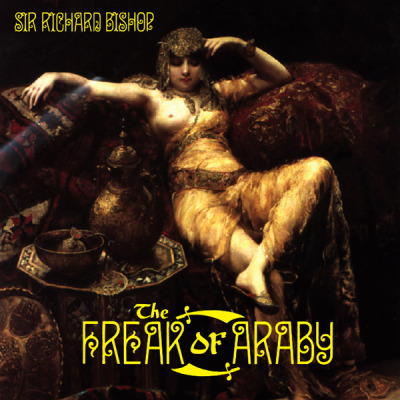 Requested.


| 3/4HadBeenEliminated was founded in Bologna, Italy, in 2002. Starting as a trio (guitarist/double bassist Stefano Pilia, turntablist/sound assembler Claudio Rocchetti, sound architect Valerio Tricoli), the drummer Tony Arrabito was added to the line up in 2004. Their first self titled record (bowindo, 2003) was released after playing a series of live concerts in which the group attention was strongly focused on the performative/theatrical/ecological aspects of the event. Comprised of a large number of electronic and acoustic instruments, the album mirrors the disparate musical influences and aesthetics of the group: live electronics, electroacoustic composition, field recordings, drones... In the following two years, after exploring and experimenting with self invented recording techniques, 3/4’s modus operandi focused on live interaction between electronic and acoustic instruments within a context in which the studio itself (tape machines, mixers, effects...) and the actual space in which the interaction took place (weird microphoning, feedbacks...) were considered and manipulated as instruments themselves (not by chance 3/4’s are fans of musicians such as This Heat, P16.D4, Todd Rundgren...). In this process, improvisation and group playing were the main issues, whereas 3/4’s first release was more based upon electroacoustic découpage. "“A Year of the Aural Gauge Operation is the second album by Italian quartet 3/4HadBeenEliminated. Like recent music from their peers Renato Rinaldi and Giuseppe Ielasi, 3/4HadBeenEliminated transpose buzzing pools of insect chatter with rich, swelling drones and movements that gesture toward song. It’s another kind of ‘post rock’ that’s far removed from the genre’s typical signification. Where previously the term may have evoked slack-wristed, head-nodding fusions of jazz, electronics and rock, groups like 3/4HadBeenEliminated engage in nothing less than the molecularization of rock music, reducing it to a dense, evocative slurry of phantom tones and fleeting, melancholy phrases guaranteed to induce déjà vu. The quartet often disrupts their own compositions, with several pieces dipping abruptly into silence only to gradually recharge on a different plane. The most engaging moments on the album occur when Claudio Rocchetti’s turntables and electronics inject ghostly voices, gritty noise and other incidentals into slowly developing themes. Building edifices of sound that threaten to topple even as they reach a graceful peak, 3/4HadBeenEliminated remind me of This Heat in their concrete approach to rock and improvisation, as they repeatedly let frayed ends disturb the pieces collected on this quietly stunning disc.” - Jon Dale Desvelao | |||||


Themselves TV Pt. 1 from anticon. on Vimeo.


Wire weaves intricate textures out of the most basic materials; the components of a song are almost as fascinating as their interplay. On this record, timbre is as important as any other facet of the music.
You need a special decoder ring (not included) to understand the lyrics, but maybe they were designed to be misunderstood. Even "Kidney Bingos," the most poppy song on this album, has a chorus that runs, "Money spines paper lung/Kidney bingos organ fun." You might very well find yourself singing along, and the tune will haunt you for weeks, but what the heck does it mean?
Someone once said that architecture is frozen music; Wire's music is animated architecture. Wire won't blow you out of the room; it'll just keep you from leaving it." - Michael Azzerad

Hopping from history to interview to description to memoir to analysis, hooking up Miles Davis and Kraftwerk and Lee Perry and Pandit Pran Nath, Toop has assembled a book that evokes and encapsulates simultaneously, a perfectly imperfect model of the kitchen-sink structures he'll convince you we can no longer live without. A fan of Sun Ra's comic grasp as well as his cosmic reach, Toop knows the dangers of political passivity, mind-body dualism, avant-garde bullshit, "the fine tribal and class divisions of leisure pursuits," and electronic "communities" that are no such thing. "What is ambient music?" he has the sense to ask early on. "Calm, therapeutic sounds for chilling out or music which taps into the disturbing, chaotic undertow of the environment?" Yet in the end he believes he is onto the future: "Music--fluid, quick, ethereal, outreaching, time-based, erotic and mathematical, immersive and intangible, rational and unconscious, ambient and solid--has anticipated the aether talk of the information ocean."
For Toop, ambient answers a need that's postmodern and millennial, synthesizing insecurity and hope, "bliss" and "non-specific dread." Together or separately, these examples are what he's talking about. They're designed as microcosms to dive into, not magic carpets to escape on, and gently or subtly or harshly or esoterically or whimsically or just plain oddly they accommodate the disturbing and the chaotic. Anybody whose notion of ambient is conditioned by the diverting sounds, swelling textures, and lulling grooves of the chill-out room may never buy another Quango collection again. Toop shows no interest in the 19th-century certainties so denatured by the new agers, whose complacent futurism and comfortable relations with a Higher Being the quieter postdance will get to eventually. Nor does he buy into the fuzak swing that signifies hip refinement not just in acid jazz, the lamest of the postdance subgenres, but in most drum-and-bass and a chunk of ambient as well. Although it's conceivable that Ocean of Sound will piss off postdance loyalists by downplaying their electronic experiments, it ought to do the opposite--point middle ways between a Hi-NRG with inevitable limits and the unobtrusive schlock the scene is just too vivid for.
Toop is a pretty vivid guy himself. Since 1995, he's assembled two additional two-CD sets for Virgin as well as recording two albums of his own music. Crooning on Venus, the vocal counterpart to Ocean of Sound, seems unnecessarily willful--mostly, I suspect, because the popular song Robert Wyatt and Chet Baker and Stina Nordenstam and Sheila Chandra think they're improving on is still far more vital formally than ambient house ever could be. Sugar and Poison, however, bears the same relation to the quiet-storm makeout-music comps where labels now recycle soul also-rans as Ocean of Sound does to ambient house--these come-ons are literally edgier, beset by an anxiety smoover grooves muffle and no less sexy for that. On Pink Noir (Virgin U.K.) and Screen Ceremonies (The Wire Editions U.K.), Toop plays guitar and anything else he can get his digits on, mixing in the worldwide sounds he's celebrated since he co-edited Collusion and bending the improvising community he's been part of since the '70s toward trad ambient. Besides how well they can or can't play, what distinguishes improvisers from mere jazz guys is their disdain or incapacity for swing or any other kind of pulse. So I'm delighted to report that Pink Noir, which features collaborators such as Hassell, is like an improviser's hodgepodge with a pulse, which usually makes all the difference. Screen Ceremonies's music for a postmodern sex ritual is even better--very Hassell-like in its tension, mystery, and organizing groove, and Hassell is as good as trad ambient gets. Tell me about a chill-out room where they play "The Psychic" and I'll do my damnedest not to nod off there." - Robert Christgau
 ok so i don`t want to be a douche but i just can`t get this link to work in fucking myspace, so i`m just gonna have to upload this album here.


